
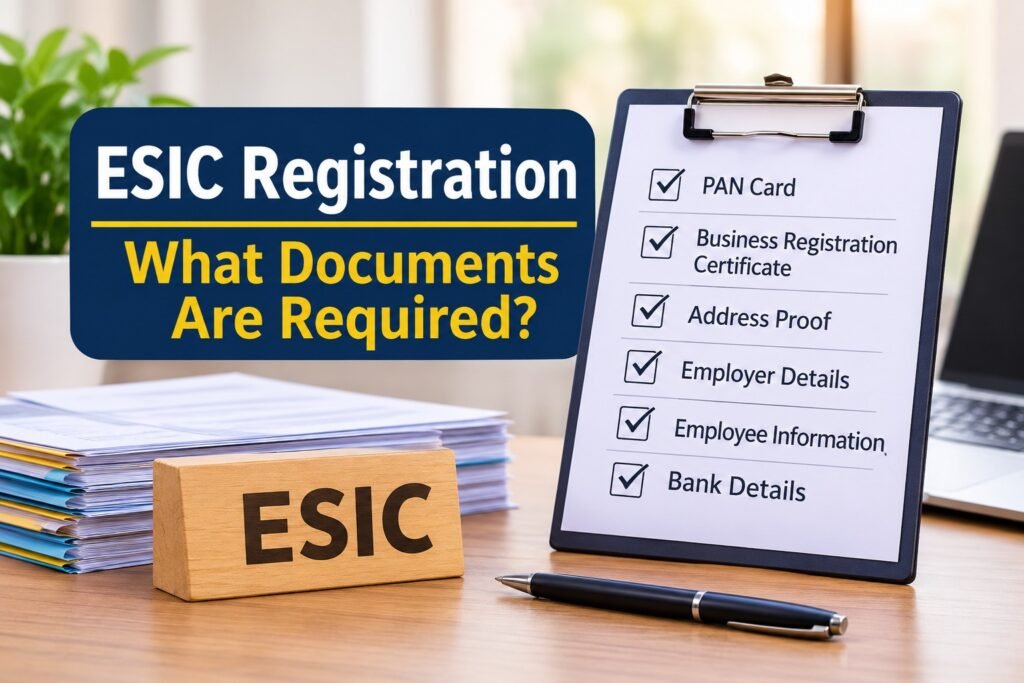
ESIC Registration: What Documents Are Required? – Complete Employer Guide 2026
Introduction
ESIC (Employees’ State Insurance Corporation) registration is an important statutory compliance requirement for eligible employers in India. It provides social security and medical benefits to employees covered under the Employees’ State Insurance (ESI) Act, 1948.
Every eligible employer must complete ESIC registration within the prescribed timeline and provide accurate details about the establishment, employer and employees.
One common question employers have is: What documents are required for ESIC registration?
In this article, we will explain the documents required, registration procedure and important points employers should know before applying for ESIC registration.
- What Is ESIC Registration?
ESIC registration is the process through which an eligible factory or establishment registers itself under the Employees’ State Insurance Act, 1948.
After successful registration, the establishment receives a 17-digit ESIC employer code number. This number is used for maintaining employee insurance records and completing monthly ESI compliance.
The scheme provides several benefits to eligible insured employees, including:
- Medical benefits
- Sickness benefits
- Maternity benefits
- Temporary disablement benefits
- Permanent disablement benefits
- Dependants’ benefits
- Documents Required for ESIC Registration
Before starting the registration process, employers should keep the following documents and information ready.
- Establishment Documents
- PAN Card of the company or business.
- Certificate of Incorporation, if applicable.
- Shops and Establishment Registration Certificate.
- Factory Licence, wherever applicable.
- GST Registration Certificate, if applicable.
- Partnership Deed, in case of a partnership firm.
- Memorandum of Association (MOA) and Articles of Association (AOA), in case of a company.
- Address Proof of Establishment
Employers should keep valid proof of the registered or operational business address, such as:
- Electricity bill.
- Telephone or other utility bill.
- Rent agreement or lease agreement.
- Property tax receipt.
- Employer and Management Details
The following details may be required:
- PAN details of the employer or authorised signatory.
- Details of directors or partners.
- Name and address of the principal employer.
- Mobile number and email address.
- Bank account details of the establishment.
- Employee Details
Employers should also prepare the following employee-related information:
- Employee name.
- Father’s or spouse’s name, wherever required.
- Date of joining.
- Date of birth.
- Monthly wages or salary details.
- Residential address.
- Employee count and employment details.
- Bank Details
The employer should keep the following bank information ready:
- Bank account number.
- IFSC code.
- Bank account details in the establishment’s name.
- Cancelled cheque or relevant bank proof, if required.
The above list is a practical preparation checklist. ESIC employer registration is an online process, and the official ESIC guidance states that physical application documents are not generally required to be submitted. The information and supporting records should be kept ready for verification or future compliance requirements.
- ESIC Registration Process: Step-by-Step Guide
Employers can complete ESIC registration through the official ESIC employer portal.
Step 1: Visit the ESIC Portal
Visit the official Employees’ State Insurance Corporation website and access the employer registration facility.
Step 2: Create an Employer Account
Provide the basic details of the establishment, including:
- Establishment name
- Business address
- Employer details
- PAN details
- Email address
- Mobile number
Step 3: Fill in Employer Registration Details
After creating the account, log in and complete the employer registration form with the required establishment and business information.
Step 4: Enter Employee and Establishment Information
Provide the required details about the number of employees, nature of business, commencement date and other applicable information.
Step 5: Submit the Registration Form
Review all the information carefully and submit the registration form through the portal.
Step 6: Receive ESIC Registration Number
After successful registration, the system generates a 17-digit ESIC employer code number and provides the registration letter (Form C-11).
Employers should save the registration letter and login credentials for future use.
- When Should an Employer Apply for ESIC Registration?
An employer must register an eligible factory or establishment within 15 days from the date the ESI Act becomes applicable to it, as prescribed under the relevant registration provisions.
Employers should not delay registration after reaching the applicable coverage requirements.
- Important Points Employers Should Remember
Before applying for ESIC registration, employers should consider the following points:
- Ensure that the establishment’s PAN and business details are correct.
- Maintain accurate employee joining dates and salary records.
- Keep establishment address proof available.
- Verify the applicable employee coverage requirements.
- Provide a valid email address and mobile number.
- Check all information before submitting the registration form.
- Preserve the ESIC registration letter and employer code.
- Complete employee registration and monthly contribution compliance after obtaining the employer code.
- Common Mistakes to Avoid During ESIC Registration
Employers should avoid these common mistakes:
- Entering incorrect establishment details.
- Providing an incorrect business address.
- Entering incorrect employee information.
- Using an invalid email address or mobile number.
- Not checking the applicable coverage requirements.
- Failing to maintain proper salary and attendance records.
- Delaying registration after the applicability of the Act.
Conclusion
ESIC registration is an important statutory responsibility for eligible employers. Keeping establishment details, PAN information, address proof, bank details and employee records ready can make the registration process easier and help avoid unnecessary delays.
Employers should ensure timely registration, accurate information and proper maintenance of employee records to maintain smooth ESIC compliance.
Proper documentation and timely registration are the first steps towards effective ESIC compliance
Need help with ITR filing or PF withdrawal?
Talk to an Expert →